Introduction
Industrial and commercial ventilation systems rely on fans to move air efficiently, regulate temperature, and ensure clean indoor environments. Among the many fan types available, axial fans and centrifugal fans (Backward Curved Centrifugal Fan, Forward Curved Centrifugal Fan) are the most widely used. Each design comes with its own strengths and limitations, making it critical for engineers, facility managers, and procurement teams to understand which option best suits their needs.
This article provides an in-depth comparison of axial fans vs centrifugal fans, covering their working principles, structural differences, efficiency levels, application areas, and cost considerations. By the end, you will have a clear understanding of which fan type is better for your specific ventilation system.
What Is an Axial Fan?
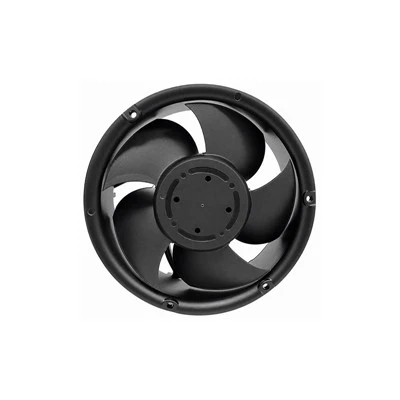
An axial fan is a type of air-moving device in which the airflow is parallel to the shaft of the fan. The blades rotate around the axis, pulling air in from one side and pushing it out directly on the other side.
Key Features of Axial Fans:
Airflow direction: Parallel to shaft
Design: Lightweight, compact, usually open-frame
Air volume: High airflow capacity
Pressure: Operates at low to medium static pressure
Noise: Typically lower at low pressure, higher at high-speed operation
Common Applications:
IT equipment cooling and data centers
HVAC and building ventilation
Automotive radiators
Household appliances (refrigerators, exhaust fans, air purifiers)
Industrial cooling towers

What Is a Centrifugal Fan?
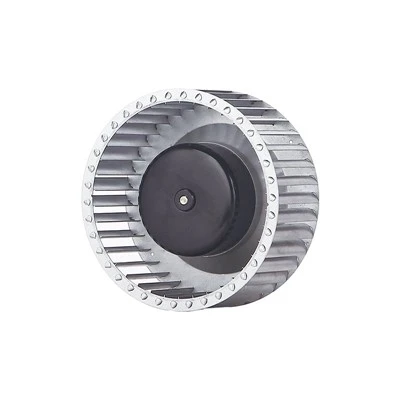
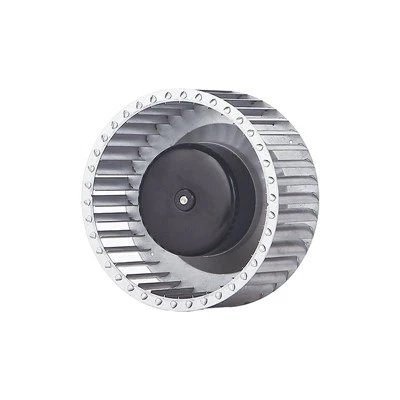
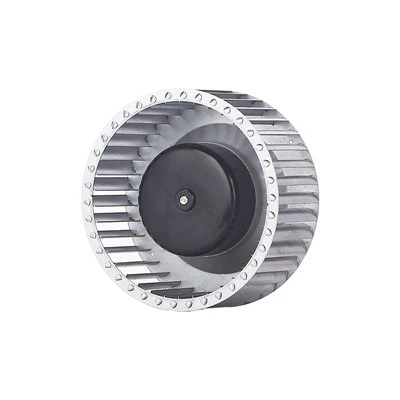
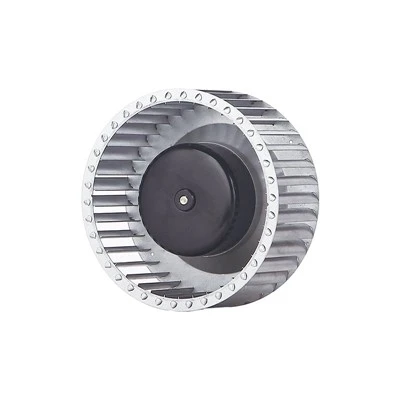
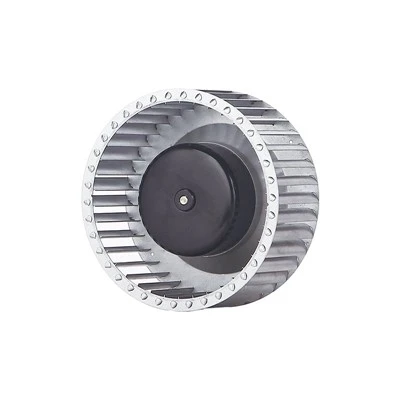
A centrifugal fan (also called a blower) works by moving air at a 90° angle to the fan inlet. Air enters the fan wheel axially and is redirected radially due to centrifugal force generated by the rotating impeller.
Key Features of Centrifugal Fans:
Airflow direction: Radial (perpendicular to shaft)
Design: Enclosed housing with scroll casing
Air volume: Moderate airflow capacity
Pressure: High static pressure capability
Noise: Typically quieter in high-pressure applications
Common Applications:
Industrial ventilation and dust collection systems
HVAC units requiring high static pressure
Cold storage and cold chain systems
Mechanical equipment cooling
Air purification and filtration systems
Boiler systems and heating equipment
Structural Differences Between Axial and Centrifugal Fans
| Feature | Axial Fan | Centrifugal Fan |
|---|---|---|
| Airflow Direction | Parallel to shaft | Perpendicular to shaft (90° angle) |
| Pressure Capability | Low to medium | Medium to high |
| Housing | Open or simple structure | Enclosed scroll casing |
| Size and Weight | Generally lightweight and compact | Heavier, larger footprint |
| Noise Level | Louder at high speed | Lower at high pressure applications |
| Efficiency | High airflow efficiency at low pressure | High efficiency at higher pressures |
Performance Comparison: Axial Fans vs Centrifugal Fans
1. Airflow and Volume
Axial fans excel in delivering high airflow at low resistance, making them ideal for free-air cooling.
Centrifugal fans handle restricted or ducted airflow better, especially where filters or bends are involved.
2. Pressure Handling
Axial fans struggle in high static pressure environments.
Centrifugal fans are designed to maintain airflow even under high resistance, such as filtration or ductwork systems.
3. Noise Levels
Axial fans can be noisy at high speeds.
Centrifugal fans often operate more quietly in high-pressure scenarios due to their enclosed housing.
4. Energy Efficiency
Axial fans are generally more efficient in low-pressure applications because they move more air with less energy.
Centrifugal fans are more efficient in systems with high resistance, as they maintain consistent performance.
5. Durability
Axial fans are simple in design but less durable in harsh industrial environments.
Centrifugal fans with IP55 protection offer superior resistance to dust and moisture, extending service life.
Cost Considerations
Axial fans are usually less expensive due to their simple structure and smaller size. They are cost-effective for applications requiring free airflow and minimal ducting.
Centrifugal fans are more costly because of their complex housing and robust construction, but they offer better long-term value in demanding industrial environments.
Which Fan Should You Choose for Your Ventilation System?
The decision between axial and centrifugal fans depends on your application requirements:
Choose an Axial Fan if:
You need high airflow with minimal pressure.
The system involves open air or minimal ducting.
Cost efficiency and compact design are priorities.
Choose a Centrifugal Fan if:
The system requires airflow under high static pressure.
The fan will be exposed to dust, moisture, or harsh conditions.
Long-term reliability and efficiency are critical.
Industrial Applications Comparison
Axial Fan Applications:
Data centers for cooling servers
HVAC systems with free-flow ventilation
Automotive and electronics cooling
Household appliances
Centrifugal Fan Applications:
Industrial air filtration and purification
Cold chain refrigeration
Boiler combustion air supply
Large HVAC systems with ducting
Mechanical and medical equipment cooling
Why Choose PBM as Your Fan Supplier?
At PBM, we specialize in EC (Electronically Commutated) brushless motors and fans, offering both axial and centrifugal solutions for B2B industrial clients worldwide.
Product Range: Backward curved centrifugal fans, IP55 fans, axial fans, single and dual inlet blowers, tangential blowers, and duct fans.
Sustainability: EC green-tech solutions for energy efficiency and lower carbon footprint.
Reliability: IP55-rated options ensure long-lasting performance in harsh environments.
Global Service: Technical support and customized solutions across 50+ countries.
By choosing PBM, you gain a reliable partner in ventilation technology with a proven track record in industries such as HVAC, refrigeration, IT, medical, and automotive.
Conclusion
When comparing axial fans vs centrifugal fans, the key lies in understanding your system's airflow and pressure requirements. Axial fans are best for high-volume, low-pressure applications, while centrifugal fans deliver superior performance in high-resistance environments.
By carefully assessing your project needs and consulting with a professional supplier like PBM, you can select the right fan to maximize efficiency, durability, and long-term value.
FAQ
Q1: Are axial fans more energy efficient than centrifugal fans?
Axial fans are more energy-efficient at low static pressures, while centrifugal fans are better for high-pressure environments. Efficiency depends on the system design.
Q2: Can centrifugal fans replace axial fans in ventilation systems?
Not always. Centrifugal fans are better for ducted systems with resistance, while axial fans are suited for open-air or free-flow cooling.
Q3: What industries use axial fans the most?
Axial fans are common in data centers, HVAC systems, electronics cooling, and automotive applications.
Q4: Why are centrifugal fans preferred in industrial air filtration?
Because they can maintain airflow even under high static pressure, which is necessary for systems with filters and ducting.
Q5: Does PBM provide custom fan solutions?
Yes. PBM offers customized EC fan solutions to meet specific requirements for airflow, pressure, noise level, and environmental conditions.