FOCUS ON EC FAN ONLY

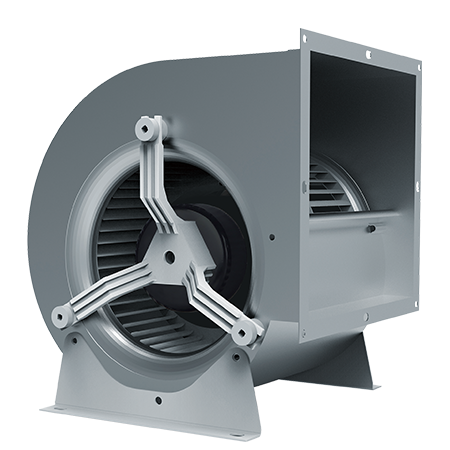
280mm EC-AC Dual Inlet Blower

280mm EC-AC Dual Inlet Blower

Please feel free to contact us
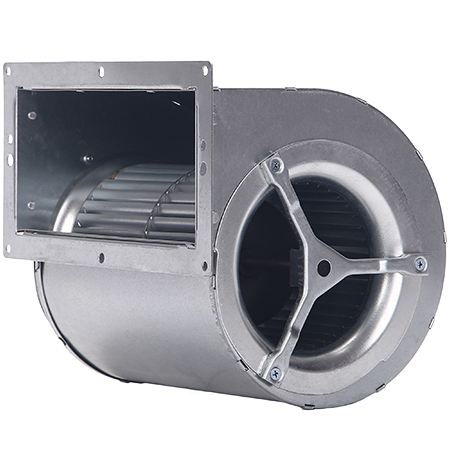
180mm EC-AC Dual Inlet Blower

180mm EC-AC Dual Inlet Blower

Please feel free to contact us
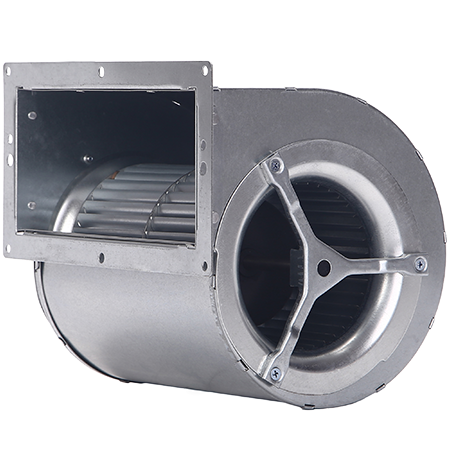
133mm EC-DC Dual Inlet Blower

133mm EC-DC Dual Inlet Blower

Please feel free to contact us
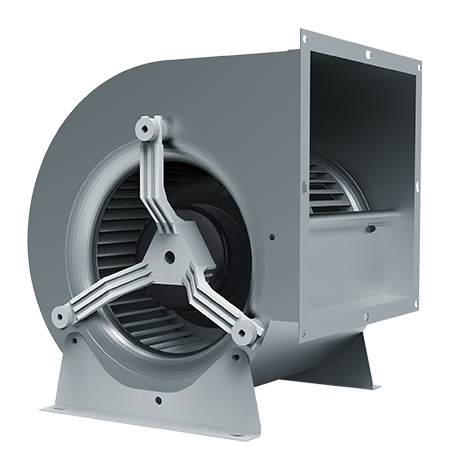
225mm EC-AC Dual Inlet Blower

225mm EC-AC Dual Inlet Blower

Please feel free to contact us

Blowers, Dual Inlet, Technical Features Overview

Quietly operating and Sturdy Anti-vibration Housing

PBM blowers, with forward curved impeller, compact EC motor fixed and inserted at the middle position, with optimized dual inlet scroll housing. 

The fans could be installed at any directions with fixed riveting nut at scroll housing metal ring, and optimized radial scroll housing design to quietly operation at customer requested working point in their ventilation duct system or unit box of different materials, such as galvanized metal, aluminum, copper, PE, PVC, polyfoam etc. 

AC and DC power supply are available for entire range of fans with integrated and intelligence EC technology motor with inside or outside mounted international standard remote control R485 communication protocol that’s suitable to be adopted in IoE(Internet of Everything), IoT(Internet of Things), smart home system, Industry 4.0 and committed to Carbon Neutrality climate change by reducing customers carbon footprints. 

PFC(Power Factor Correction), up to λ>96%, is optional for electricity grad stabilization compliance in certain circumstances of applications. ErP2015 (Energy-related Products) Directive conformity, COMMISSION REGULATION (EU) No 327/2011 of 30 March 2011 implementing Directive 2009/125/EC of the European Parliament and of the Council with regard to eco-design requirements for fans driven by motors with an electric input power between 125 W and 500 kW.

Dual Inlet Blower

Impeller Sizes: From 133mm to 280mm diameter;

Sound Level: From 64dBA to maximum 78dBA according different rotation speed;

Airflow: Maximum to 4,100CMH, Cubic Meter per Hour, equal to approx. 2,412CFM , Cubic Feet per Minute;

Air Pressure: Maxim to 1,000Pa, equal to 102mm H2O and to 4 inches H2O;

Power: Maximum motor input power goes to 1,050W (equal to 1.43hp, horsepower) at motor diameter 138mm.

DC Blower Dual Inlet D(133-146)

DC Blower Dual Inlet D(133-146)

EC Blower Dual Inlet D(133-280)

EC Blower Dual Inlet D(133-280)

Application

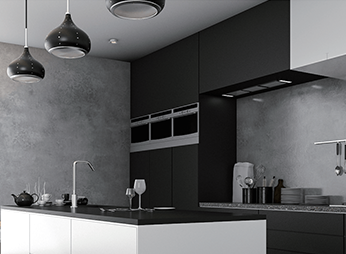
Household Electric Appliances

Household-Electric-Appliances
Quiet, efficient cooling for household appliances. Low noise, long-life, safe and reliable for ACs, refrigerators, purifiers, and kitchen equipment.

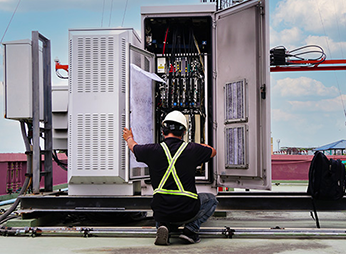
IT and Electronic Industry

IT-and-Electronic-Industry
Precision cooling for IT and electronics. High static pressure, low vibration, clean airflow for servers, storage, and cleanroom operations.

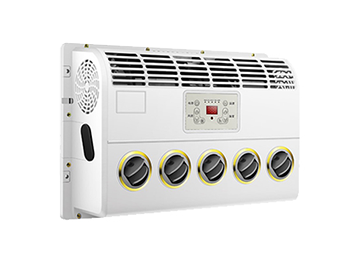
Seat Ventilation

Seat-Ventilation
Silent, comfortable airflow for seat ventilation. Low noise, high efficiency, slim design, enhancing driving comfort and keeping seats dry.

FAQ

  • How do I choose the right dual inlet blower?

    +
    When selecting a dual inlet blower, buyers should evaluate:
    • Required airflow (CFM or m³/h)
    • Static pressure requirements
    • Installation dimensions
    • Motor type (AC or EC motor)
    • Voltage and frequency
    • Noise level limitations
    • Operating environment
    • Energy efficiency goals
    Reviewing the blower performance curve helps ensure accurate system matching and efficient operation.
  • What are the advantages of a dual inlet blower?

    +
    Dual inlet blowers offer several important advantages, including:
    • Higher airflow volume
    • More balanced airflow distribution
    • Stable static pressure performance
    • Compact structure for large airflow applications
    • Improved ventilation efficiency
    • Reliable continuous-duty operation
    These benefits make them widely used in industrial and commercial ventilation systems.
  • Can dual inlet blowers be customized?

    +
    Yes. Many manufacturers offer customized dual inlet blower solutions for OEM and industrial projects. Customization options may include:
    • Airflow and pressure specifications
    • AC or EC motor options
    • Voltage and frequency
    • Speed control integration
    • Mounting structure
    • Corrosion-resistant materials
    • Noise reduction optimization
    • Housing and impeller design modifications
    Customized blowers are widely used in specialized ventilation and cooling systems.
  • What is the difference between a dual inlet blower and a single inlet blower?

    +
    The main difference is airflow capacity and intake structure. A dual inlet blower draws air from both sides of the impeller, while a single inlet blower draws air from only one side. Dual inlet blowers are typically preferred for:
    • Higher airflow requirements
    • Large HVAC systems
    • Air handling units (AHU)
    • Commercial ventilation systems
    • Applications requiring balanced airflow distribution
    Single inlet blowers are generally used in compact systems with moderate airflow needs.
  • Where are dual inlet blowers commonly used?

    +
    Dual inlet blowers are commonly used in:
    • HVAC systems
    • Air handling units (AHU)
    • Fan coil units (FCU)
    • Industrial ventilation systems
    • Commercial air circulation equipment
    • Air purification systems
    • Refrigeration equipment
    • Data center cooling systems
    Their high airflow capability makes them suitable for large-scale ventilation applications.

We are here to help

captcha
×

Contact Us

captcha
×

Inquire

*Name
*Email
Company Name
Tel
*Message
*Verify Code
captcha

By continuing to use the site you agree to our privacy policy Terms and Conditions.

I agree