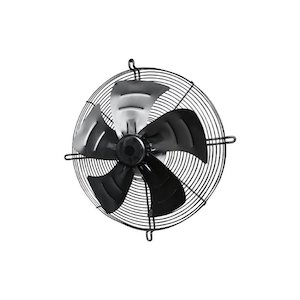
FOCUS ON EC FAN ONLY
FOCUS ON EC FAN ONLY
Axial fans are widely used in various industries and residential applications for ventilation and cooling purposes. While they are essential for maintaining airflow and air quality, their energy consumption can vary depending on the size, design, and operational conditions. In this article, we will explore the energy efficiency of axial fans, how to calculate their power consumption, and ways to reduce their power usage and noise levels.
Axial fans, known for their ability to move large volumes of air, can range from highly energy-efficient models to those that consume more power. The energy efficiency of an axial fan depends on several factors:
The size of the fan and its blades significantly affect how much energy it uses. Larger fans, while capable of moving more air, tend to require more power. Similarly, the design of the fan blades can influence the amount of energy consumed. Efficient designs, such as those with aerodynamically optimized blades, can reduce drag and improve the fan’s performance per watt.
The airflow (measured in cubic feet per minute, or CFM) and pressure (measured in inches of water column, or inches WC) needed for a specific application play a large role in how much power the fan uses. For applications requiring high airflow but low pressure (like cooling or ventilation in large spaces), axial fans are often more energy-efficient than centrifugal fans. However, if high pressure is required, the fan may consume more power.
The type of motor used in the axial fan is a key determinant of its overall energy efficiency. Modern motors, such as electronically commutated (EC) motors, are designed to be highly energy-efficient, offering reduced energy consumption compared to traditional induction motors. EC motors adjust their speed to meet the required demand, helping to conserve energy when full power is not needed.
Axial fans often operate more efficiently when running at lower speeds. When the fan speed is higher than necessary, it consumes more energy. Similarly, if the fan is underloaded, meaning it is running without enough air resistance, it may not perform optimally, leading to wasted power.
To determine the energy consumption of an axial fan, you need to consider both the fan’s power rating and the operating conditions. Here’s a general approach to calculating the power used by an axial fan:
The first step is to check the fan’s power rating, typically given in watts or horsepower (HP). This rating represents the amount of power the fan consumes when it is operating at full capacity.
The efficiency of the fan motor and the aerodynamics of the blades will influence actual power consumption. For example, if the fan is designed to have an efficiency of 80%, this will reduce the energy needed compared to a less efficient model.
Multiply the fan’s power rating by the number of hours it operates per day to estimate daily power consumption. Then, multiply this by the number of days it operates in a year to get the annual energy consumption.
Formula:
Annual Energy Consumption=Fan Power (in kW)×Operating Hours per Day×Days per Year\text{Annual Energy Consumption} = \text{Fan Power (in kW)} \times \text{Operating Hours per Day} \times \text{Days per Year}Annual Energy Consumption=Fan Power (in kW)×Operating Hours per Day×Days per Year
If your axial fan is often running under reduced load (less airflow or pressure), you can adjust the calculations to reflect the actual load. Fans operating at partial load consume less energy, so the energy consumption will be lower than the rated power.
While axial fans are generally energy-efficient compared to other types of fans, there are still several strategies to reduce power consumption and improve overall performance. Here are some tips:
When purchasing a fan, choose one with an energy-efficient motor, such as an EC motor or a brushless DC motor. These motors adjust their speed based on demand, ensuring that energy is only used when needed. Additionally, look for fans that have energy efficiency ratings, such as those that meet Energy Star standards.
Select an axial fan that is appropriately sized for the application. Oversized fans waste energy by moving more air than necessary. A fan that is too small, however, may struggle to meet the airflow requirements, which could result in excessive wear and tear on the motor.
Many modern axial fans come with variable-speed controls that allow you to adjust the fan’s speed depending on the cooling or ventilation requirements. Lowering the fan speed when full power is not needed can save significant amounts of energy. Installing a fan controller with speed adjustment capabilities is a great way to ensure optimal energy use.
Ensure that the fan is installed correctly to minimize energy waste. Incorrect installation can lead to airflow restrictions, causing the fan to work harder to achieve the required performance. Make sure the fan is aligned correctly, with no obstructions in its intake or exhaust paths, to ensure maximum efficiency.
Regular cleaning and maintenance can help prevent energy losses. Dust and dirt buildup on the fan blades can cause the motor to work harder, leading to increased power consumption. Regular lubrication of the motor and checking for loose parts also help ensure that the fan runs smoothly, reducing friction and energy waste.
While energy efficiency is a top priority, axial fans can sometimes produce noticeable noise due to high airflow rates and the motor’s speed. Here are some tips to reduce the noise:
Select an axial fan with specially designed blades to reduce noise. These blades often have a curved or contoured design that minimizes air turbulence, which is a common source of noise in fans.
In applications where noise is a concern, consider installing sound-dampening materials around the fan housing. Acoustic insulation around the fan casing can help absorb sound and reduce noise transmission.
As mentioned earlier, running the fan at full speed when it’s not necessary can increase noise levels. Adjusting the speed to match the demand for airflow can significantly reduce both power consumption and noise.
Axial fans are a highly efficient solution for ventilation and cooling, but understanding their energy consumption and efficiency is key to maximizing their performance while minimizing power use. By selecting the right fan, optimizing its operation, and maintaining it properly, you can ensure that your axial fan remains energy-efficient, effective, and cost-effective. Implementing the tips outlined in this article will not only reduce energy consumption but also help minimize noise, contributing to a more comfortable and sustainable environment.
 If you have any interest in our products,please feel free to contact us & we are ready to serve you

By continuing to use the site you agree to our privacy policy Terms and Conditions.