FOCUS ON EC FAN ONLY
FOCUS ON EC FAN ONLY
Axial fans play a vital role in many HVAC systems (Heating, Ventilation, and Air Conditioning), particularly in ventilation and cooling applications. These fans are designed to move air along the axis of the fan, which makes them highly efficient for moving large volumes of air with low resistance. When integrated into an HVAC system, axial fans contribute significantly to improved air circulation, enhanced cooling capabilities, and energy efficiency.
In this article, we will explore how axial fans work within HVAC systems, their benefits, maintenance considerations, and why they are a popular choice for ventilation and cooling.
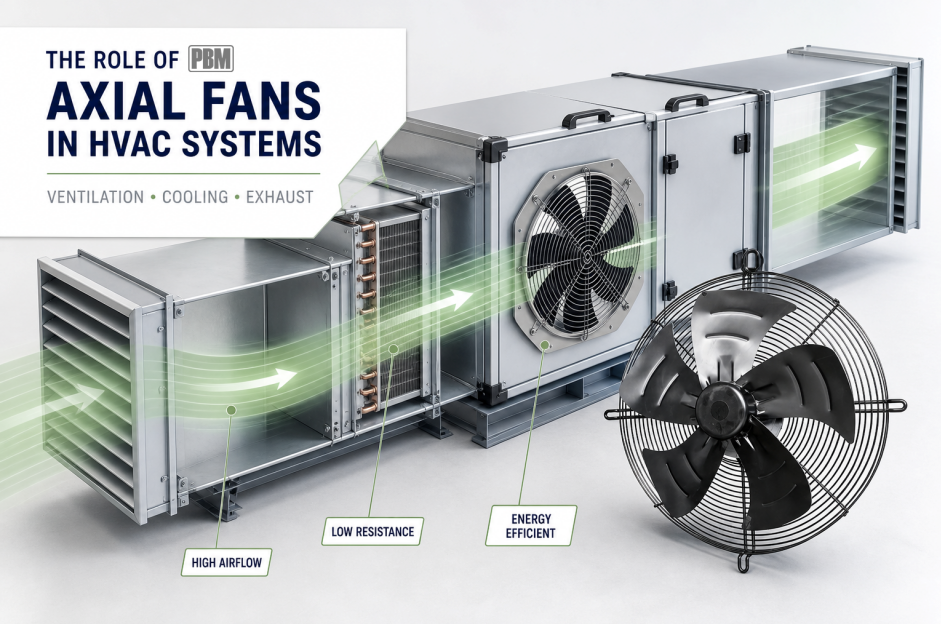
Axial fans consist of blades mounted on a rotor that pushes air through the system. The air flows in a parallel direction to the axis of the fan, unlike centrifugal fans, which move air radially (perpendicular to the fan's axis). This design allows axial fans to move large volumes of air at a relatively low pressure, which is ideal for many HVAC applications.
In HVAC systems, axial fans are typically used in ventilation ducts, air handling units (AHUs), and cooling systems. They can serve a variety of functions, including:
Ventilation: Axial fans ensure continuous airflow in spaces like offices, warehouses, and residential buildings, maintaining a consistent supply of fresh air while exhausting stale air.
Cooling: These fans help circulate cool air throughout a space or facility, assisting air conditioning systems in maintaining consistent temperature levels.
Dehumidification: By promoting air circulation, axial fans can help reduce moisture buildup in areas prone to high humidity, such as basements or kitc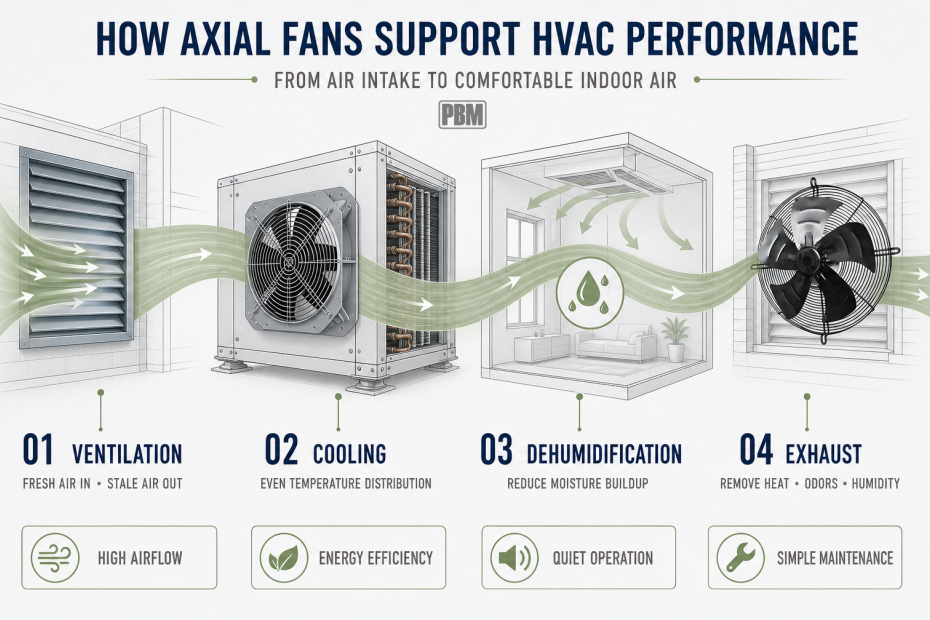
Axial fans are particularly well-suited for high-flow, low-pressure applications, making them ideal for providing even airflow across a large area. Whether used in commercial buildings or residential spaces, these fans enhance the circulation of air, ensuring that temperature and air quality remain consistent throughout the space.
Effective for Large Spaces: Their ability to move large volumes of air efficiently makes them a popular choice for large ventilation applications, including ducted systems in offices, warehouses, and industrial buildings.
Even Distribution: Axial fans maintain a steady airflow that helps distribute cool or warm air uniformly, preventing hot or cold spots in the building.
One of the primary reasons for integrating axial fans into HVAC systems is their energy efficiency. These fans consume relatively low power while still achieving high airflow, which helps reduce overall system energy consumption.
Cost-Effective: By reducing the workload on HVAC systems, axial fans help lower energy bills, especially in high-demand cooling environments.
Low Power Consumption: Due to their design and ability to move large volumes of air without requiring high pressure, axial fans use less energy compared to other types of fans, such as centrifugal fans.
Axial fans tend to operate more quietly than other types of fans, such as centrifugal fans, which makes them ideal for residential and commercial HVAC systems. Their design minimizes vibration, reducing noise levels while still providing effective air movement.
Ideal for Noise-Sensitive Areas: In offices, bedrooms, and medical facilities, where noise levels must be kept to a minimum, axial fans offer a quieter alternative to more conventional cooling solutions.
Axial fans can be adapted to a wide range of HVAC applications, from residential cooling systems to large-scale industrial air handling units. Whether for ventilation, exhaust systems, or cooling towers, these fans are flexible and can handle varying airflow requirements.
Multi-Use Capabilities: In HVAC applications, axial fans can function as part of intake systems, exhaust systems, and cooling systems, making them a versatile component for different environments.
While axial fans are generally low-maintenance, proper care and attention are required to ensure that they continue to function optimally. Regular maintenance can extend the lifespan of the fan and help avoid costly repairs. Here are some key maintenance tasks:
Over time, dust, dirt, and debris can accumulate on the fan blades, reducing efficiency. Regular cleaning ensures the blades remain free of obstructions, allowing the fan to move air more effectively.
How to Clean: Use a damp cloth or a vacuum to clean the blades. Be sure to power off the fan before performing any cleaning to avoid injury.
The bearings on an axial fan’s motor are responsible for smooth rotation. Over time, these bearings can wear out or become damaged, leading to decreased performance and potential fan failure.
Routine Checks: Regularly check the fan’s rotation. If you notice any irregularities or hear strange noises, it may be time to lubricate or replace the bearings.
Inspect the fan housing for any signs of damage or wear. Cracks or misalignments can affect airflow and performance. Ensure that the fan is securely mounted and that there are no loose components that could disrupt airflow.
Proper Alignment: Misalignment of the fan blades can cause additional strain on the motor, potentially leading to overheating or failure.
Like the bearings, the motor is a critical component of the axial fan. Periodically inspect the motor for wear and check the electrical connections to ensure that the fan is operating at full capacity.
Lubrication: Some axial fans have motors that require occasional lubrication. Always follow the manufacturer’s instructions for maintenance.
While axial fans are versatile, they are most beneficial in the following HVAC scenarios:
In large buildings or industrial settings where fresh air circulation is critical, axial fans are ideal for maintaining airflow. They are perfect for ventilating commercial spaces, manufacturing plants, and residential buildings.
When combined with air conditioning, axial fans help distribute cool air evenly throughout the space. They work well in office buildings, warehouses, and large residential homes, ensuring that cool air reaches all corners of the space.
In kitchens, bathrooms, or industrial spaces where exhausting hot air or moisture is essential, axial fans help create an efficient exhaust system that removes pollutants and excess moisture.
Axial fans are a critical component in many HVAC systems, particularly for ventilation, cooling, and exhaust applications. Their ability to provide high airflow at low pressure makes them well-suited for spaces requiring efficient air circulation. Moreover, their energy efficiency, quiet operation, and maintenance simplicity make them an excellent choice for improving indoor air quality and reducing energy costs.
By incorporating axial fans into your HVAC system, whether in a commercial, industrial, or residential setting, you can achieve optimal airflow, cooling, and ventilation, all while ensuring that your system runs efficiently for years to come.
 If you have any interest in our products,please feel free to contact us & we are ready to serve you

By continuing to use the site you agree to our privacy policy Terms and Conditions.