

All Rights Reserved Privacy Policy Site Map
FOCUS ON EC FAN ONLY
FOCUS ON EC FAN ONLY
When it comes to optimizing the performance of your air conditioning (AC) system, choosing the right fan can make all the difference. A well-suited fan can enhance airflow, improve cooling efficiency, and contribute to lower energy consumption. In this guide, we’ll walk you through how to choose the best fan for your air conditioning system, including the considerations you need to make regarding fan type, size, and airflow capacity.
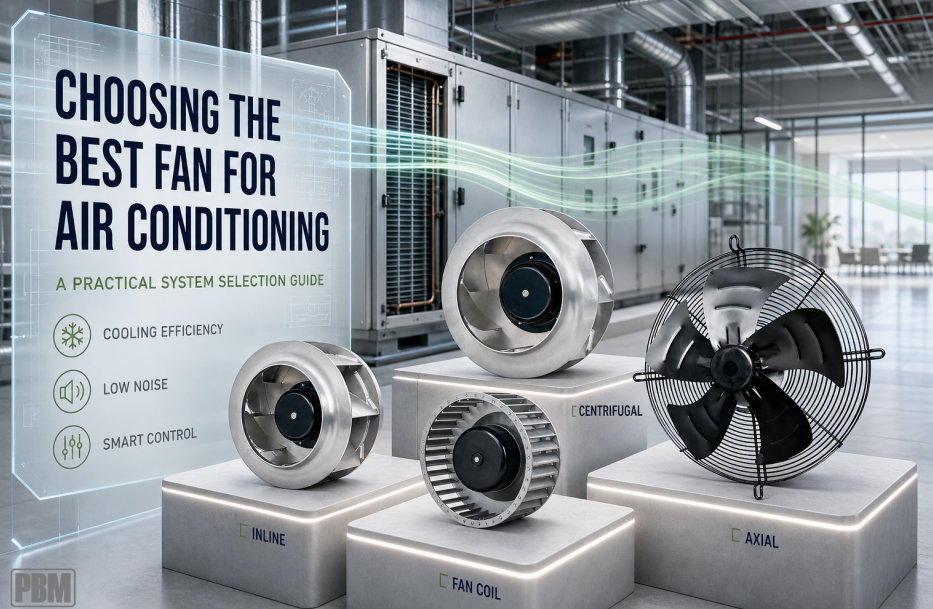
Fans are a critical component of any air conditioning system. They circulate air, helping to maintain the cooling effect by pushing cold air through the system and exhaust hot air outside. A poorly chosen or inefficient fan can reduce your AC unit’s overall effectiveness, leading to higher energy bills and decreased comfort.
There are different types of fans used in air conditioning systems, each suited for particular applications. Understanding the type that fits your setup is crucial for optimizing efficiency.
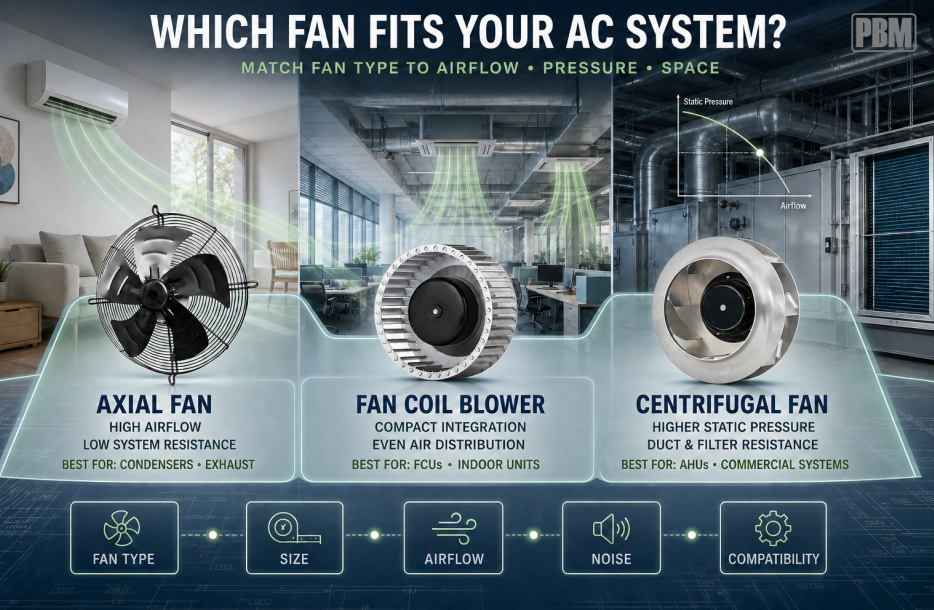
Axial Fans: These are the most common type of fan used in air conditioning systems. They push air through the system in a straight line, providing efficient airflow. They are typically used for smaller to medium-sized units where space constraints may exist.
Centrifugal Fans: These fans are ideal for larger air conditioning systems. They are designed to move air in a spiral path, which helps to increase airflow pressure. This makes them perfect for larger homes, commercial buildings, or heavy-duty industrial applications where high airflow is necessary.
Fan Coil Units (FCUs): FCUs combine both the fan and cooling unit in one. These are common in larger air conditioning systems, particularly centralized cooling setups, such as those found in offices or multi-story buildings. The FCU fan helps distribute chilled air evenly across the space.
The size of the fan directly impacts its airflow capacity, which in turn affects the overall performance of your air conditioning system. Undersized fans may struggle to push the required volume of air, while oversized fans can lead to unnecessary energy consumption and potentially disrupt system balance.
Proper Sizing: Make sure the fan is appropriately sized for the air conditioning unit. Manufacturers typically provide guidelines for the recommended fan size based on the cooling capacity of the AC. For example, larger units (commercial or industrial systems) may require fans with higher CFM (cubic feet per minute) ratings.
Airflow Requirements: In order to determine the ideal fan size, it’s essential to calculate the airflow requirements for your space. This is determined by the volume of the room, the cooling load, and the type of AC unit. Proper airflow helps maintain consistent temperature and efficiency.
The airflow capacity of the fan is crucial for ensuring your air conditioning system works efficiently. Airflow is measured in CFM (cubic feet per minute), and it refers to the amount of air the fan can move in one minute.
Residential Use: For most residential air conditioning systems, the fan’s airflow capacity should be sufficient to maintain comfortable indoor temperatures and prevent uneven cooling. Look for fans with airflow capacities that align with your home’s cooling needs.
Commercial or Industrial Use: For larger spaces, such as office buildings or factories, it’s important to choose a fan with a higher CFM rating. These environments often require systems that can handle greater air circulation over a larger area to ensure even cooling and comfort for employees.
Energy-Efficiency Considerations: Higher airflow may require more energy, so it’s important to balance high CFM with energy efficiency. Many modern fans are designed with EC motors (electronically commutated motors) that provide better performance while consuming less energy.
Fans in air conditioning systems can sometimes create noise, especially if they’re running at high speeds. If you're installing the fan in a living space, such as a bedroom or office, it’s essential to consider the noise level.
Low Noise Fans: Look for fans specifically designed for quiet operation, often labeled as “whisper-quiet” or “low noise”. These fans feature sound-dampening designs or materials that reduce the level of noise during operation.
Fan Motor Type: The type of motor used in the fan also influences its noise level. For quieter operation, consider choosing fans with brushless DC motors or EC motors. These motors run more smoothly and create less noise compared to conventional AC motors.
The material and construction of the fan also impact its durability and performance. Look for fans made from high-quality materials that can withstand prolonged use without degradation. Materials like stainless steel, galvanized steel, or high-grade plastic are commonly used in AC fans for their durability and corrosion resistance.
Ensure the fan is compatible with your air conditioning system. If you have a centralized HVAC unit or split-system AC, the fan must be able to integrate seamlessly with the existing infrastructure. Choosing a fan coil unit may be an ideal solution for these setups.
Many newer fans come with smart features, such as adjustable speed settings, automatic temperature control, or the ability to integrate with smart thermostats. These features can help you optimize cooling and ensure efficient use of energy.
Here are a few recommended fans that work well with air conditioning systems:
Honeywell TurboForce Power Air Circulator Fan: This fan is ideal for circulating air in smaller to medium-sized rooms. Its powerful airflow helps AC units maintain an even temperature, especially in spaces that tend to get stuffy.
Vornado 630 Mid-Size Whole Room Air Circulator: Known for its compact design and high CFM capacity, this fan works well in cooling rooms when paired with an air conditioning unit.
Fantech Premium Inline Fan: Perfect for fan coil units or centralized AC systems, this inline fan offers great airflow and efficiency. It’s built to work quietly while offering high-performance airflow.
AirKing High Performance Exhaust Fan: A great option for ventilation in commercial systems, this fan is designed to increase airflow in larger spaces and enhance the cooling performance of air conditioning systems.
Choosing the right fan for your air conditioning system is essential for optimizing cooling efficiency, energy savings, and comfort. When making your selection, consider:
The fan type (axial, centrifugal, or fan coil units)
The fan size and airflow capacity needed for your space
The noise level of the fan for quieter operation
Durability, compatibility, and smart features for added convenience
By understanding your specific needs and carefully evaluating the various options, you can ensure your air conditioning system is working at its best, providing consistent comfort while maintaining energy efficiency.
 If you have any interest in our products,please feel free to contact us & we are ready to serve you

By continuing to use the site you agree to our privacy policy Terms and Conditions.