FOCUS ON EC FAN ONLY
FOCUS ON EC FAN ONLY
Axial fans are widely used across various industries for ventilation, cooling, and air circulation. While standard axial fans are suitable for many general applications, there are instances where a custom axial fan is required to meet specific operational demands. Whether dealing with high-temperature environments, high-pressure systems, or space-constrained applications, custom-designed axial fans offer tailored solutions that ensure optimal performance, efficiency, and reliability.
In this article, we will explore how custom axial fans can be designed for specialized applications, the key considerations in their design, and the advantages of tailoring fans for specific needs.
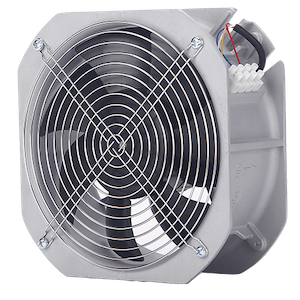
A custom axial fan is a fan that is specially designed to meet the unique requirements of a particular application or operating environment. Unlike standard axial fans, which are mass-produced with fixed specifications, custom axial fans are built with tailored features to handle specific challenges, such as extreme temperatures, pressure variations, or unique physical constraints.
Customization allows industries to maximize the efficiency of their ventilation and cooling systems by ensuring that the fan’s design, performance, and durability match the specific needs of the application. Common reasons for customizing axial fans include:
High-Temperature Applications: Fans needed for environments with elevated temperatures (such as industrial furnaces, ovens, or HVAC systems) require components that can withstand heat without compromising performance.
High-Pressure Environments: Applications in systems that operate under high pressure, like combustion systems or certain chemical processing plants, demand fans that can handle the stress without failure.
Space Limitations: In some industries, particularly in aerospace or automotive cooling systems, space is limited. Custom fans are designed to fit within tight spaces without sacrificing airflow performance.
Specific Flow Requirements: Some systems may require specific airflow patterns or higher-than-usual airflow capacities to maintain optimal operating conditions.
When designing a custom axial fan, several factors must be considered to ensure the fan performs optimally in its intended application. Below are some critical design considerations:
Airflow Requirements: The amount of air that needs to be moved (measured in cubic feet per minute, CFM) is one of the primary factors in the design of custom axial fans. This parameter varies based on the application, with some industries requiring very high airflow to maintain cooling or ventilation efficiency.
Pressure Considerations: Some applications require fans to work under higher pressures, such as in boilers or chemical reactors. Custom axial fans are designed with stronger motors, impellers, and reinforced components to ensure they perform optimally in high-pressure environments.
Fan Speed Control: In certain applications, controlling the fan speed is essential for precise airflow regulation. Custom axial fans can be designed with variable-speed motors, allowing for flexibility in performance based on real-time needs.
High-Temperature Materials: Custom axial fans used in high-temperature environments (such as furnaces, foundries, or kilns) must be made from materials that can withstand extreme heat. Stainless steel, aluminum, and special heat-resistant alloys are often used for blades, housings, and motors.
Corrosion Resistance: In environments where the fan will be exposed to chemicals, moisture, or salt (like in the marine industry or chemical processing plants), materials with high corrosion resistance, such as stainless steel or coated metals, are selected for fan construction.
Lightweight Materials: For applications in aerospace or where weight is a critical factor, custom axial fans may use lightweight materials, such as composite blades or carbon fiber, to reduce weight while maintaining performance.
Compact Design: Custom axial fans can be designed to fit specific dimensions, ensuring that they work in tight spaces without sacrificing airflow. In applications such as automotive cooling systems or HVAC units, space constraints are often a limiting factor.
Blade Design: Custom fans allow for the design of specialized fan blades with specific pitch angles, curvatures, and diameters to optimize airflow for unique applications. These blades can also be engineered to handle high loads and to reduce noise levels, which is especially important in sensitive environments like hospitals or clean rooms.
In many industrial applications, excessive noise and vibration can be a problem. Custom axial fans can be designed to minimize both:
Noise Reduction: For environments that require quieter operation, such as medical facilities or research laboratories, fan blades can be optimized for low-noise operation, while the fan casing and motor can be designed with vibration-damping materials.
Vibration Isolation: Custom axial fans can include vibration-isolating mounts or dampers to reduce the transmission of vibrations to surrounding structures, which is particularly important in industries like aerospace or automotive applications where even small vibrations can impact performance.
Industries like metal processing, furnaces, and incinerators require axial fans that can withstand extreme heat. Custom-designed fans for these applications feature high-temperature resistance and are often used in cooling systems, ventilation, and exhaust systems where regular fans would fail.
In applications like combustion chambers, chemical reactors, and nuclear facilities, where fans are subject to high pressure, custom axial fans are designed with enhanced structural strength to ensure reliable performance without compromising safety.
In industries such as chemical processing, pharmaceutical manufacturing, and oil and gas, custom axial fans are used for exhaust and ventilation systems to handle aggressive chemicals, gases, or vapors. These fans are designed to meet stringent ATEX standards for explosion-proof operation.
Axial fans in the aerospace and automotive industries are often custom-designed for cooling systems in engines, HVAC systems, and battery cooling. These fans must meet specific size, weight, and performance criteria.
Custom axial fans for clean rooms, laboratories, and medical facilities must meet stringent cleanliness standards, while minimizing contamination and noise. These fans are often designed with features such as HEPA filters and sterile environments in mind.
In industries where performance, efficiency, and durability are critical, custom axial fans provide tailored solutions that address specific challenges. By considering factors such as airflow, pressure, material selection, and space limitations, these fans can be optimized to meet the unique needs of each application. Customization allows for enhanced performance, energy efficiency, and longevity, making them invaluable in industries ranging from automotive to chemical processing and high-temperature applications.
If you have specific ventilation or cooling needs that standard axial fans cannot meet, a tailored axial fan design could be the solution you need for optimal performance and reliability. Whether you are dealing with extreme temperatures, hazardous environments, or space constraints, custom axial fans can offer the perfect solution for your unique requirements.
 If you have any interest in our products,please feel free to contact us & we are ready to serve you

By continuing to use the site you agree to our privacy policy Terms and Conditions.