FOCUS ON EC FAN ONLY
FOCUS ON EC FAN ONLY
For exporters, distributors, and OEM procurement teams
Cold air fans are becoming a practical cooling choice in markets where full air conditioning is too expensive, unreliable, or difficult to install. For importers and brand owners, the challenge is not only finding a low price. The real work is choosing a product that can run safely, move enough air, meet local certification requirements, and survive transport and daily use.
The most important part of a cold air fan is often hidden inside the housing. The fan and motor decide how much air moves through the cooling media, how loud the unit sounds, and how long it can run without trouble. A weak blower will limit performance even if the outer design looks attractive. This is why many experienced buyers pay close attention to the EC centrifugal fan, forward curved centrifugal fan, or inline fan used inside the product.
The term cold air fan covers several products. It may refer to an outdoor evaporative cooler, an industrial cold air fan for a workshop, a cold air mini fan for personal use, a ceiling mounted cooling fan for commercial spaces, or a cold air circulating fan used together with an existing AC system. Each product needs a different sourcing approach.
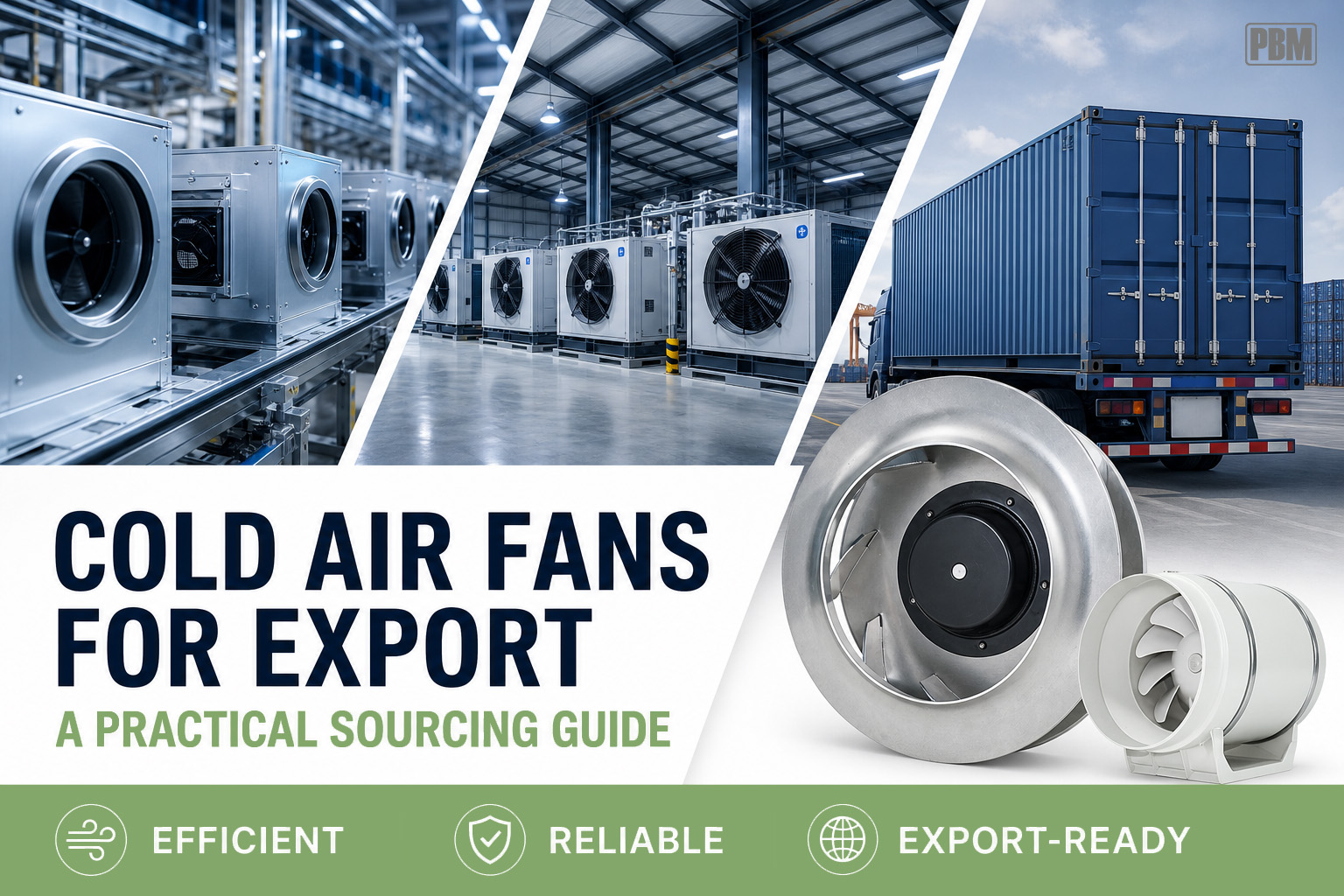
In everyday sourcing, buyers often use “cold air fan” as a broad term. Some products cool air by pulling it through wet evaporative media. Others are compact personal coolers or circulation fans marketed for cooling comfort. The product name may be similar, but the structure and performance can be very different.
When comparing suppliers, look beyond the product photo and ask what type of fan, motor, and cooling structure are used. The blower specification tells you more about real airflow and noise than a sales description does.
Longer hot seasons, rising electricity costs, and limited access to central air conditioning are pushing more buyers toward portable and semi portable cooling products. A cold air fan can offer local cooling at a lower running cost, which makes it attractive for homes, shops, workshops, restaurants, outdoor areas, and temporary sites.
Market preference depends heavily on climate. Dry and hot areas usually respond well to evaporative cooling with strong airflow. Humid regions often prefer circulation fans or personal cooling units, because evaporation is less effective. Outdoor buyers care about weather resistance and stable operation, while industrial buyers focus on coverage area, durability, and continuous running time.
Reliable suppliers can be found through trade fairs, verified B2B platforms, audited manufacturer listings, and referrals from related appliance or ventilation industries. The key is to separate real factories from trading companies early. A trading company may still be useful, but you need to know who controls production, quality, and after sales support.
Before requesting samples, ask for business history, production videos, certification files, and references from similar export orders. A serious supplier should be able to discuss airflow, static pressure, motor type, noise level, insulation, safety protection, and packaging. If the conversation stays only at price and appearance, the risk is higher.
Start with the basics. Check whether the supplier has a valid ISO quality system, export experience, and certifications required by your target market. CE, RoHS, CB, ETL, or other approvals should be supported by traceable file numbers, not only logo marks on a brochure. For larger industrial cold air fans, also confirm whether the supplier can produce at volume rather than only assemble samples.
It is also worth asking who will answer technical questions after the order is placed. A factory with engineering support can usually solve airflow, motor, and noise problems faster than a supplier that depends only on sales staff.
Do not approve a cold air fan based only on photos or a short video. Order several pieces of each model and test them under the same voltage and environmental conditions expected in the target market. Measure airflow, cooling effect, power draw, noise, start voltage, and build consistency across the sample batch.
The motor should start reliably at low voltage and protect itself under locked rotor or overheating conditions. Housing strength, water tank sealing, switch quality, wiring, plug type, and internal insulation should also be checked. A good sample should not only perform well once. It should perform consistently across several units.
The fan inside is especially important. A stable EC centrifugal fan can hold its airflow curve and reduce energy use over time. For compact products, a well designed forward curved fan may be more suitable because it provides strong airflow in a small space with controlled noise.
A cold air mini fan should be checked for battery runtime, USB charging stability, personal air throw, and low noise at close distance. An industrial cold air fan needs testing for coverage area, tank capacity, frame strength, wheel quality, and continuous duty operation. Outdoor models should be tested for weather resistance, UV stability, rust protection, and safe use in semi exposed spaces.
For ceiling mounted cooling fans, mounting safety and directional control matter more than appearance. For a cold air circulating fan, focus on air throw distance and how evenly it moves air around the room, especially when used with an existing AC system.
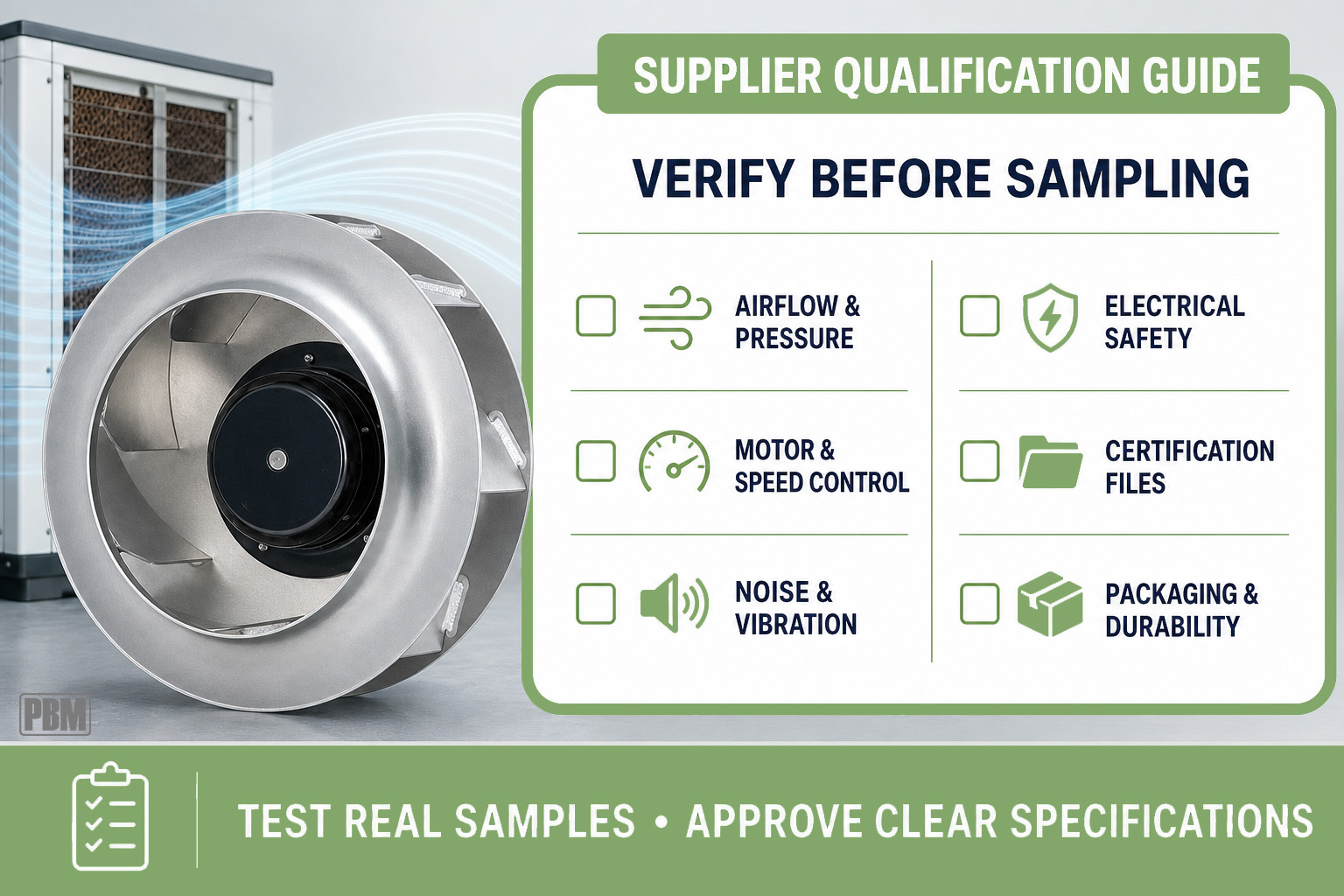
For larger orders, a factory audit is worth the time. It can be done on site or by live video if travel is not practical. Check how the factory inspects incoming materials, especially motors, bearings, cooling media, pumps, wiring, and plastic parts. Ask how they control winding, balancing, electrical safety, and final inspection.
End of line testing should not be treated as a formality. Each unit should pass electrical safety checks, functional testing, and appearance inspection before packing. For products that run at higher speed, dynamic balancing is important because vibration can cause noise, bearing wear, and customer complaints.
Production capacity should be higher than your order volume, otherwise your delivery may be delayed when the factory is busy. If you need private label packaging, different voltage, custom color, plug changes, or small batch branding, confirm these details before paying a deposit. Many problems appear not because the supplier cannot build the product, but because customization was not written clearly at the start.
For a first order, many buyers use a deposit before production and balance payment against shipping documents. For larger orders, a letter of credit may offer better documentary protection. Whether you choose FOB or CIF, make sure the responsibilities for freight, insurance, inspection, and documents are clear.
The purchase order should reference approved samples, certification requirements, packaging details, inspection standards, spare parts, warranty terms, and rules for material changes. If the motor, cooling media, pump, controller, or plastic material cannot be changed without written approval, state that clearly. This protects both sides and reduces disputes after shipment.
Cold air fans can be damaged by moisture, impact, poor stacking, and rough container handling. Use moisture resistant packaging, adequate corner protection, and clear carton markings. Before shipment, confirm the loading plan and prepare the required clearance documents, including certificates, test reports, packing list, invoice, and certificate of origin if needed.
A cold air fan for outdoor is often used on patios, at events, in open warehouses, and for temporary site cooling. Weather resistance, stable base design, and safe electrical protection are more important than chasing the highest airflow number.
Industrial cold air fans are used in factories, workshops, warehouses, and large halls. Buyers in this category care about coverage area, tank runtime, frame strength, easy movement, and motor reliability. A robust backward curved centrifugal fan can help move air through the cooling media with better pressure performance.
A cold air mini fan is usually chosen for desks, bedrooms, dorm rooms, and personal work areas. The product should be quiet, compact, easy to charge, and safe for close range use. In this type of product, the fan must balance airflow with low noise and low power draw.
Ceiling mounted cooling fans are used in restaurants, gyms, shops, and other places where floor space is limited. Buyers should pay close attention to mounting safety, swing structure, wiring, ceiling clearance, and maintenance access.
A cold air circulating fan is not always designed to cool air directly. In many projects, its job is to move cool air more evenly through a room and reduce hot spots. Air throw, circulation pattern, and quiet operation are the key specifications.
Sourcing cold air fans for export works best when the process is practical and disciplined. Screen the supplier, test real samples, verify the internal fan and motor, check production control, and put quality requirements into the purchase order. A product that matches the application will create fewer returns than a low priced model with unclear specifications.
For cold air fan brands and exporters, the fan and motor are central to product performance. PBM Motor and Fan manufactures EC backward curved centrifugal fans, forward curved centrifugal fans, and inline duct fans for long life, low noise air movement. If you are sourcing the air moving core of a cold air fan, send your application, target airflow, voltage, and volume forecast to our engineering team for sample support and technical documentation.
 If you have any interest in our products,please feel free to contact us & we are ready to serve you

By continuing to use the site you agree to our privacy policy Terms and Conditions.