FOCUS ON EC FAN ONLY
FOCUS ON EC FAN ONLY
"What are centrifugal fans used for?" is a fundamental question that engineers and purchasers across the world often ask when constructing airflow systems in the domains of contemporary fluid engineering and industrial thermal management. Because of their exceptional pressure output, centrifugal fans—the "central breathing system" of contemporary industry, HVAC systems, and precision electronic equipment—are changing the power landscape of contemporary green production.
Using its years of experience in EC (Electronic Commutation) energy-saving power, PBM, a pioneer in high-tech fluid equipment, offers a thorough examination of the indispensable core uses of centrifugal fans in a variety of vertical sectors.
Large commercial buildings and high-end cleanrooms have very high frictional resistance in their ventilation ducts, which prevents regular fans from penetrating the thick physical filtering systems. Centrifugal fans, however, can
Ultra-High Cleanliness Control: Air must be pushed through ultra-high efficiency (HEPA) filters in biosafety labs, pharmaceutical facilities, and semiconductor chip manufacturers. In order to overcome filter resistance and guarantee that indoor air purity satisfies strict process standards, PBM's specifically made centrifugal fans for cleanroom HVAC purification can continually supply strong static pressure.
Green Building Energy Efficiency Upgrades: When choosing air handling units (AHUs), modern commercial real estate increasingly favors high-efficiency, low-power-consumption centrifugal fans. This greatly lowers the long-term running power consumption of HVAC systems while retaining considerable exhaust volumes.
Fans must overcome the mechanical vibrations and fluctuating resistance experienced during vehicle operation in addition to limited airflow ducts in the cramped areas of mobile vehicles.
Automotive Cabin Comfort: Inside specialized automotive cabins and transit interiors, automotive heating system backward curved fans are widely trusted by engineering designers. The inherent non-overloading characteristics of backward-curved impellers prevent motor burnout under varying backpressures, delivering absolute reliability for heating systems.
Vibration-Damping Structures: For rugged vehicles operating on uneven terrains, standard fan housings are prone to failure. OEMs deploy custom bracket mounted centrifugal fans for vehicles. These assemblies feature heavy-duty mounting plates and anti-disengagement brackets, guaranteeing seamless fluid dynamics even on the most turbulent journeys.
As electronic microprocessors grow exponentially in computing density, miniature fluid systems must deliver unprecedented concentrated pressure within cramped physical spaces.
Precision Electronics Dissipation: Inside tightly packed hardware such as high-end gaming laptops, 5G telecom enclosures, and server chassis, an electronic cooling mini centrifugal blower serves as the ultimate thermal savior. By drawing air inward and discharging it at a precise 90-degree angle, it packs sufficient pressure to blast heat away through tightly spaced cooling fins.
Centrifugal fans act as the primary vacuum engine in environmental engineering. In harsh environments like cement plants or chemical facilities, they drive the suction needed to pull contaminated air into filtration units. Furthermore, their high-velocity pressure is extensively used in material handling systems to transport lightweight bulk solids (like wood chips or plastic pellets) through sealed pneumatic piping networks.
Green Power's Future Trend: Intelligent Control and EC Technology Traditional AC drive fans are switching to energy-efficient EC centrifugal fans in response to the strict goals of the worldwide industrial low-carbon transformation.
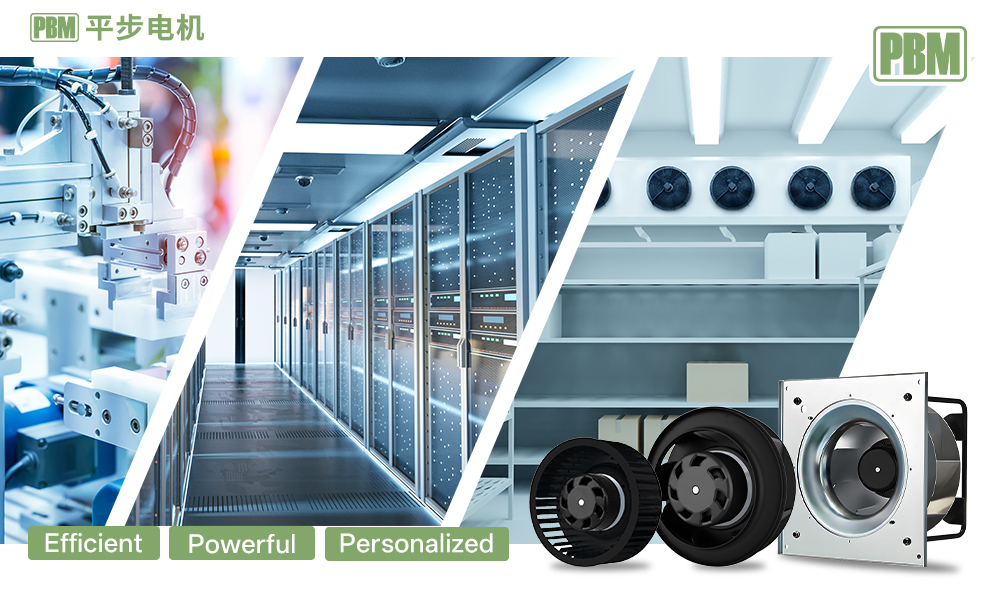
By extensively combining improved impeller geometry with DC brushless centrifugal fans, PBM essentially eliminates the mechanical wear and energy waste of conventional motors. These days, high-end automated factories and data centers need EC speed-regulating fans with exceptionally high environmental adaptability in addition to fans with EC fan characteristics (achieving variable frequency stepless speed regulation and remote data monitoring via RS485/Modbus protocol).
For instance, PBM's IP55 Backward Curved Centrifugal Fan may reduce the overall energy consumption of fluid systems in contemporary green industries by over 20% while maintaining an aerodynamic efficiency of over 85% in highly severe industrial conditions with high humidity and dust.
A: Axial fans are best suited for open spaces with high airflow and low resistance. While centrifugal fans produce high static pressure, which makes them appropriate for violently forcing airflow into high-resistance systems with bends, lengthy ducts, or HEPA filters,
Where can I get specialized solutions for EC centrifugal fans?
A: For expert fluid selection advice and quick sampling services, international equipment makers may go straight to the PBM official website at https://www.pbmmf.com/.
 If you have any interest in our products,please feel free to contact us & we are ready to serve you

By continuing to use the site you agree to our privacy policy Terms and Conditions.